Local SEO and Structured Data: A Step-by-Step Guide for Small Business Websites
What actually helps a local business appear in search and AI answers: profiles, content, schema markup and measurement, with examples you can apply.
What search engines and AI assistants look for
Search engines and AI assistants try to answer a question with a source they can trust. For local businesses, the signals that matter most are consistent business information, clear pages that answer real questions, and evidence that real customers use and recommend the business. No tactic guarantees a ranking, and anyone promising one should be treated with caution.
Step 1: Claim and complete your business profile
Create or claim your Google Business Profile and fill in every field that applies:
Keep the same name, address and phone number across your website, social profiles and directories. Inconsistencies make it harder for search systems to be confident about your details.
Step 2: Make your website answer real questions
Pages that rank and get cited tend to answer a specific question clearly. For each service you offer, create a page that covers:
Write for the customer, in plain language. Avoid repeating the same text across pages with only the city name changed. Search engines treat this as thin content.
Step 3: Add structured data
Structured data is code that describes your page in a format machines read easily. The common format is JSON-LD, placed in a script tag. For a local business, start with the LocalBusiness type:
{ "@context": "https://schema.org", "@type": "LocalBusiness", "name": "Example Salon", "address": { "@type": "PostalAddress", "streetAddress": "12 Main Road", "addressLocality": "Pune", "addressCountry": "IN" }, "telephone": "+91-00000-00000", "openingHours": "Mo-Sa 10:00-20:00" }
Useful types for small businesses include LocalBusiness, Service, FAQPage for real question-and-answer content, and Organization for brand details. Follow these rules:
Structured data helps systems understand a page. It does not replace good content.
Step 4: Earn reviews honestly
Ask satisfied customers to leave a review, and make it easy by sending a direct link. Reply to every review, positive or negative, politely and specifically. Never buy reviews, write your own or offer rewards only for positive ones. These practices breach platform policies and can result in removal.
Step 5: Make the site fast and usable on a phone
Most local searches happen on mobile. Check that:
Step 6: Help AI assistants understand your site
Some sites publish a plain-text summary file, often called llms.txt, describing the business, its services and its key pages. It is an emerging convention rather than a standard that every system reads, so treat it as an optional extra. The same fundamentals apply: accurate details, clear answers and consistent information across the web.
Step 7: Measure what matters
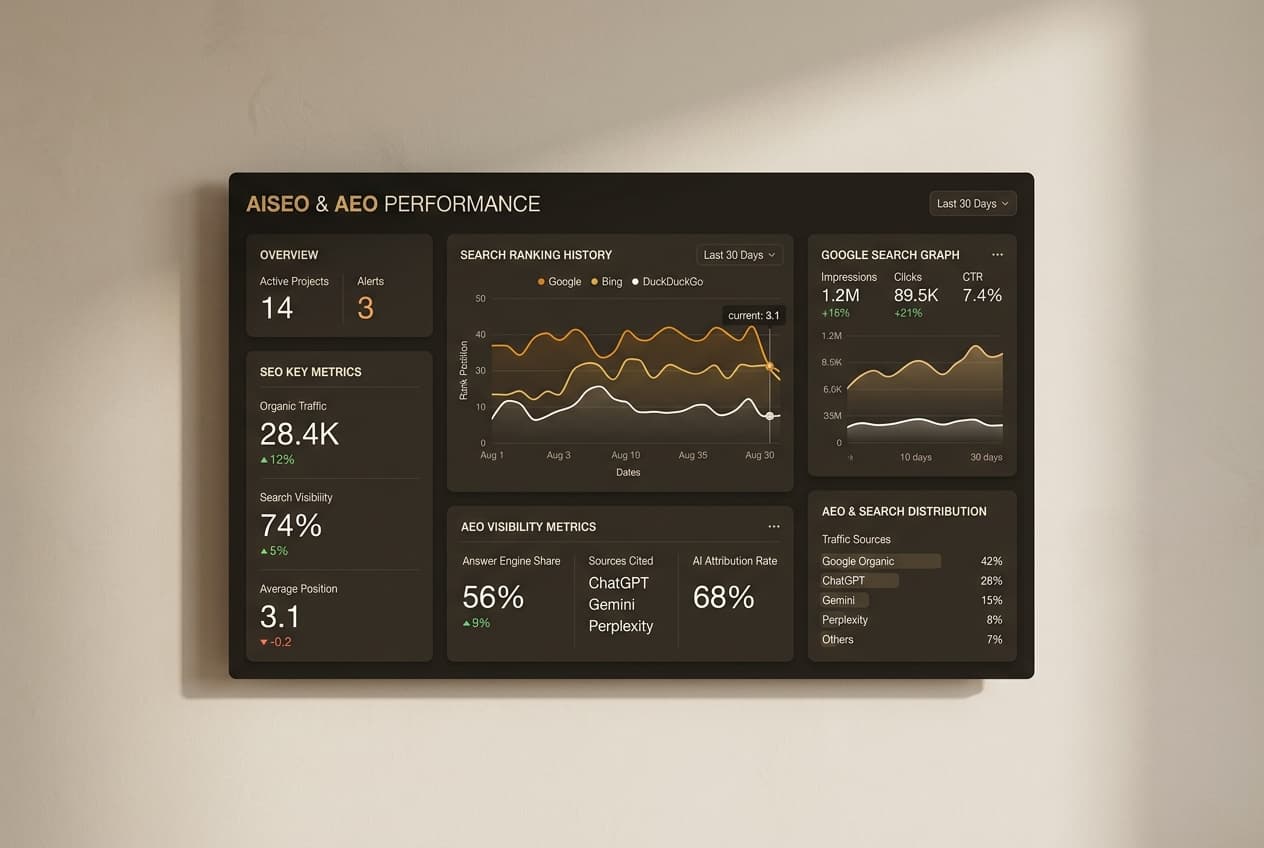
Use Google Search Console to see which queries bring impressions and clicks, and which pages have errors. Use your Business Profile insights to see calls, direction requests and website visits. Track enquiries and bookings that come from search by asking new customers how they found you.
Review monthly, make one or two improvements, and give changes time to show results. Local search is a long-term effort.